Enter the living lineage of Chicana spiritual activism through spirit stories grounded in intergenerational, ancestral, and embodied wisdom—guiding those in the in between as we step into our souls’ (r)evolution and dream new worlds into being.
“Reading this book will fuel us with ‘spirit stories’ as creative strategies of re-memberance, transformation, and persistence, inspiring us to continue our work with radical love.”
- Irene Lara, co-editor of Fleshing the Spirit: Spirituality and Activism in Chicana, Latina, and Indigenous Women’s Lives
JOIN OUR COMMUNITY & STAY CONNECTED
Receive a discount code to purchase the book and a special invitation to the virtual Chicana Spiritual Activism: Making Change, Making Soul Book Launch in October 2026.
Learn intergenerational wisdom and insights about spiritual activism;
Receive resources and information on my collaborations with members of the Making Soul Collective.
Receive all notices about book openings, community pláticas, and other events.
Questions or comments? CONNECT WITH ME

You recall the moments—when the unmistakable tension arose; you felt it.
Perhaps it was in elementary school, when the girl who was white told you her father wouldn’t allow you or Monica Vela into their house.
Or when you witnessed a classmate being told by the teacher to speak English in class and save the Spanish for outside, in the halls.
But then, the questions hit closer to home.
Perhaps you noticed women and girls cooking the meals and serving the men and boys at family functions. Or have an early memory of wondering why women could not be priests. Wondering, if your best friend wasn’t Catholic, would they really go to hell?
The questioning continued, but you did not know what to do with it. Eventually, it comes with a distancing.
You are called the questioner, and teased for not going to church during college. A rift forms; a distancing from your Latina/x cultural traditions. A distancing from deep rooted connections to family.
Yet, the longing to act remains. A longing to address the injustices, the inhumanity, and the power imbalances you see and feel all around you, which many others cannot.
You feel alone and at the same time, deeply alive.
And that comes with a price.
A severing from what you once knew—the refuge of misa, of community, of belonging.
The questioning turns to rage as you learn more about colonial violence through a feminist lens.
The inquiry turns to, “now that I question the religious institution in which I was raised, what is next? Do I leave the family that raised me? My beloved grandmother? The Virgin of Guadalupe? The deepest sense of belonging I’ve ever known?”
An unfamiliar ache pounds in your heart and weaves itself throughout the pieces of your fragmented mind, body, and spirit.
You possessed an insatiable curiosity for which you just didn’t have the language. Yet.
And it positioned you in the in between.
In between worlds, ideas, identities, communities, and more.
You witnessed injustices and patriarchy long before you had the language for them. Just a knowing you were taught not to trust, having been marked the questioner.
As time goes on, you wade even further into the tumultuous waters in between ways of knowing and being.
But that would soon change.
“It is time to re-member and time to reclaim, that which is yours.”
Finally, an opening ...
You see something different in their stories, you feel something different within. They, too, are questioners.They, too, see what you see.
They have dedicated their lives to asking the same kinds of questions.
During and since the movement they have created art, written essays and books, built spaces for our gente, recovered feminista histories and created Chicana Studies. They advocated for bilingual education and culturally relevant curriculum in classrooms, and promoted Chicana and Latina representation in politics.
They built new worlds.
You are no longer alone in asking the questions. There are others and they didn’t just ask the questions, they exposed and fought against, the injustices.
Rather, you receive a warm reception. Ask away, mija, they say, ask away.
You did not have words to describe what happened next.
Something inside you felt different.
The spark was unmistakable.
Your soul was activated, your spirit ignited.
The questioning—of yourself—begins to fade as you are seen—truly seen—for the first time.
You realize you are not alone.
There are others. And there is language for the anguish of the in between.
You come to learn about terms like nepantla and borderlands—words for the world you have been living, yet didn’t know existed.
“Brenda Sendejo’s book is foundational scholarship for anyone seeking deep conocimiento and understanding of the political, cultural, and spiritual influence of Texas Chicanas of and beyond the movement era.”
— Lilliana P. Saldaña, co-editor of Latinas and the Politics of Urban Spaces.
“I went from not knowing Mexican American women were involved in political parties to learning they led political parties.”
This is my path. This is my spirit story.
My journey began in a Mexican American Studies class at UT Austin in the spring of 2004, the day I met Maria Elena Martinez. That day something shifted within me, forever.
The portal to this book opened the day I met Maria Elena. It cleared the way to my path of spiritual activism and marked the beginning of a journey that would bring me here.
Maria Elena was the first woman to lead a political party in Texas as the last state chair of La Raza Unida Political Party. I went from not knowing Mexican American women were involved in political parties to learning they led political parties.
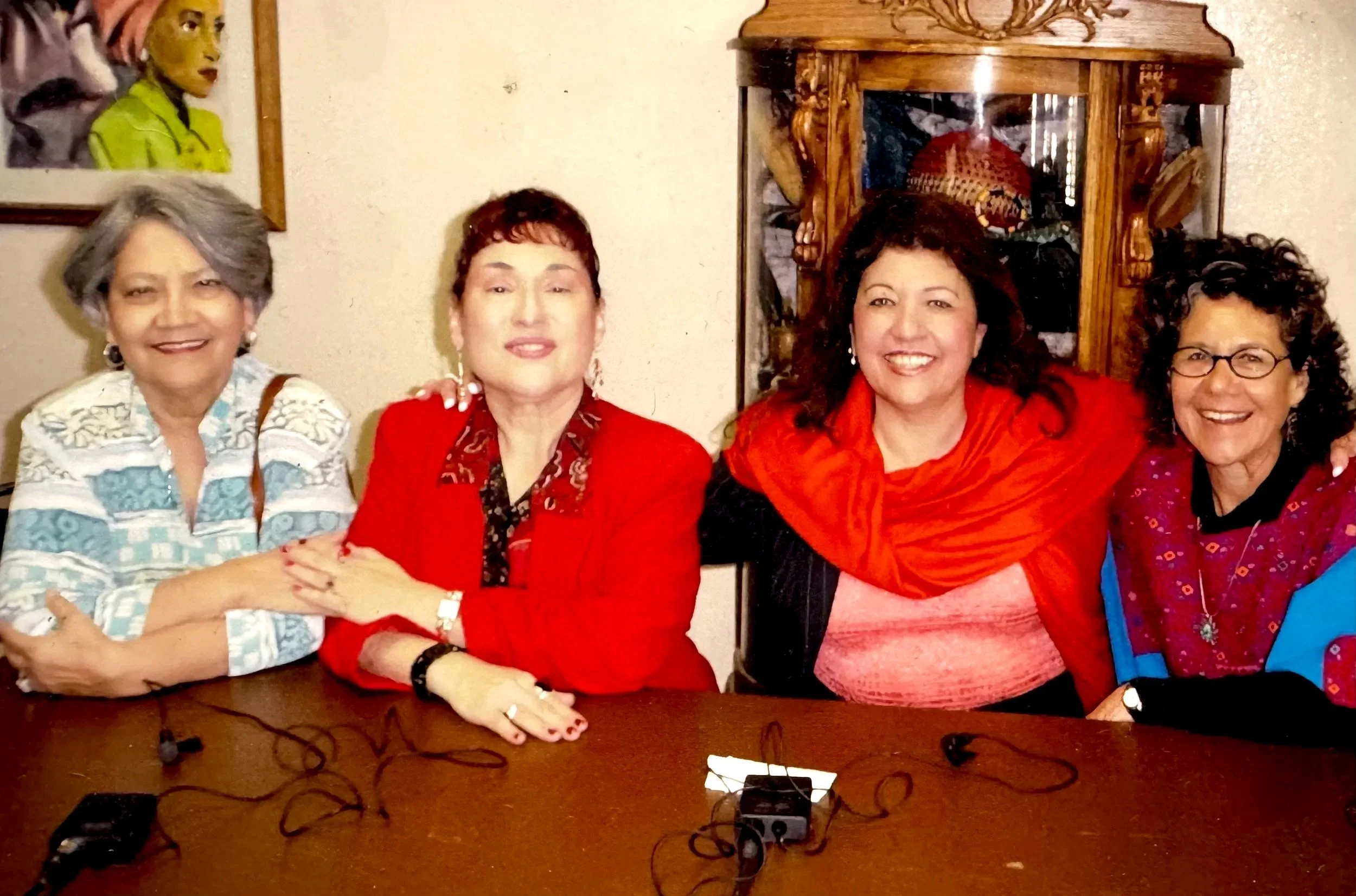
Left to right: Martha P. Cotera, Evey Chapa, Luz Bazan Gutierrez, and Maria Elena Martinez. The Women of La Raza Unida Oral History Project, directed by Dr. Emilio Zamora, UT Austin, April 2004.
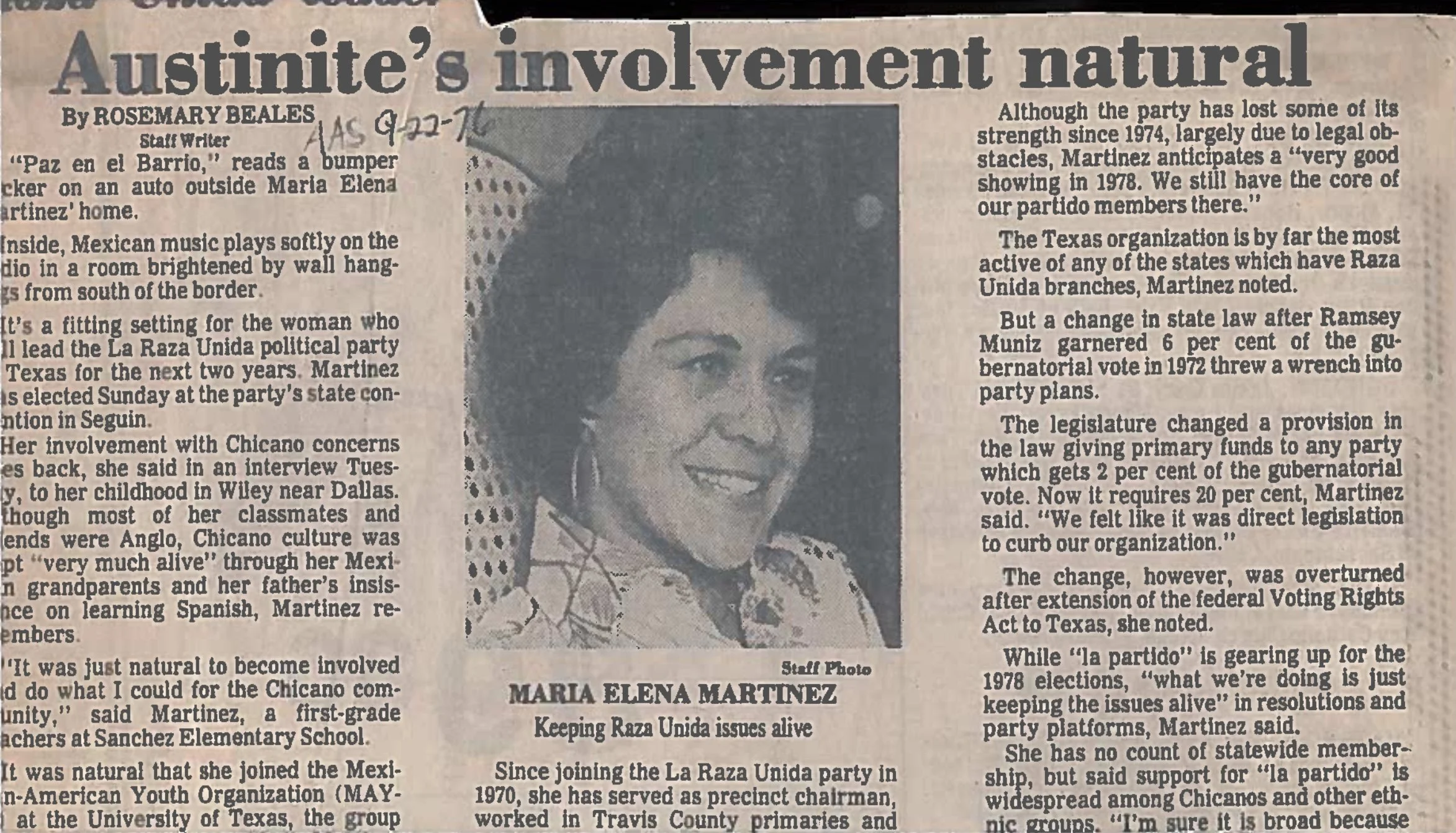
A retired bilingual education teacher, in her 30s Maria Elena left the Catholic church, for it no longer met her spiritual needs. Slowly a veil lifted—she, too, was a questioner.
She, too questioned racial injustice and gender inequality from an early age.
She turned to an egalitarian practice of shamanism and curanderismo/folk healing that aligned with her feminist sensibility and social justice ethic.
I saw myself in Maria Elena’s story. I was no longer alone. My soul breathed.
Beloved “Meme” has become a dear friend, spiritual mentor, and madrina.
She (re)introduced me to decolonial histories and helped me to re-member by reclaiming my ancestral and feminista cultural heritage and soul wisdom.
In doing so, she led me home, to myself.
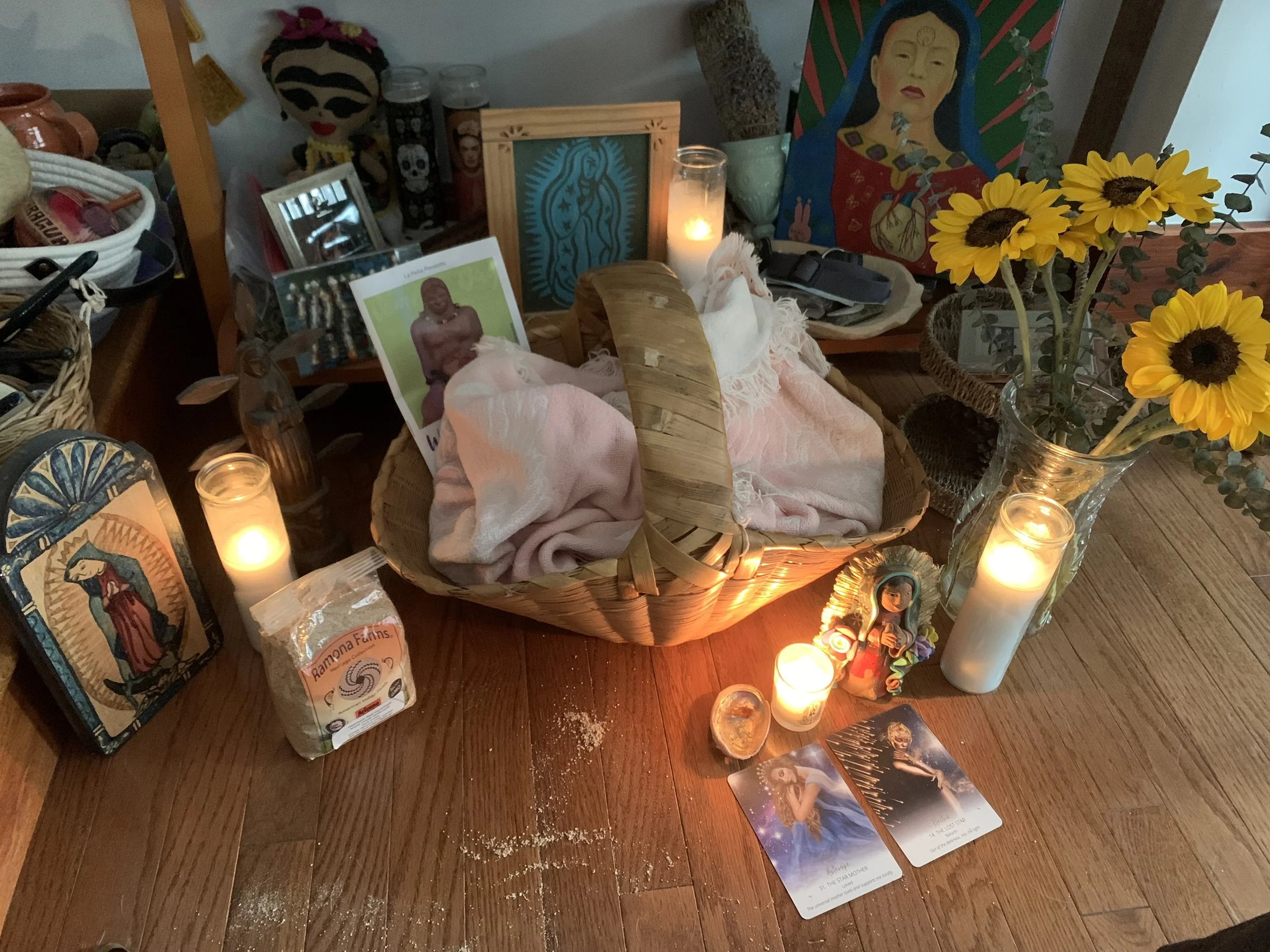
Now, home is the recovered practice of the home altar, once denied me by social pressures of acculturation and racism, reintroduced to me by Maria Elena.
Home is Our Lady of Guadalupe as the decolonized earth goddess, Tonantzin, who I learned from Maria Elena would usher me into her fold outside of any institution and with unconditional love and acceptance. I came home to the Divine Feminine through Maria Elena’s Chicana feminism and spiritually in practice. To spiritual activism.
Maria Elena introduced me to her comadres, comrads, and contemporaries—other spiritual activists of the movement-era whose lives I have chronicled and been changed by for over 20 years.
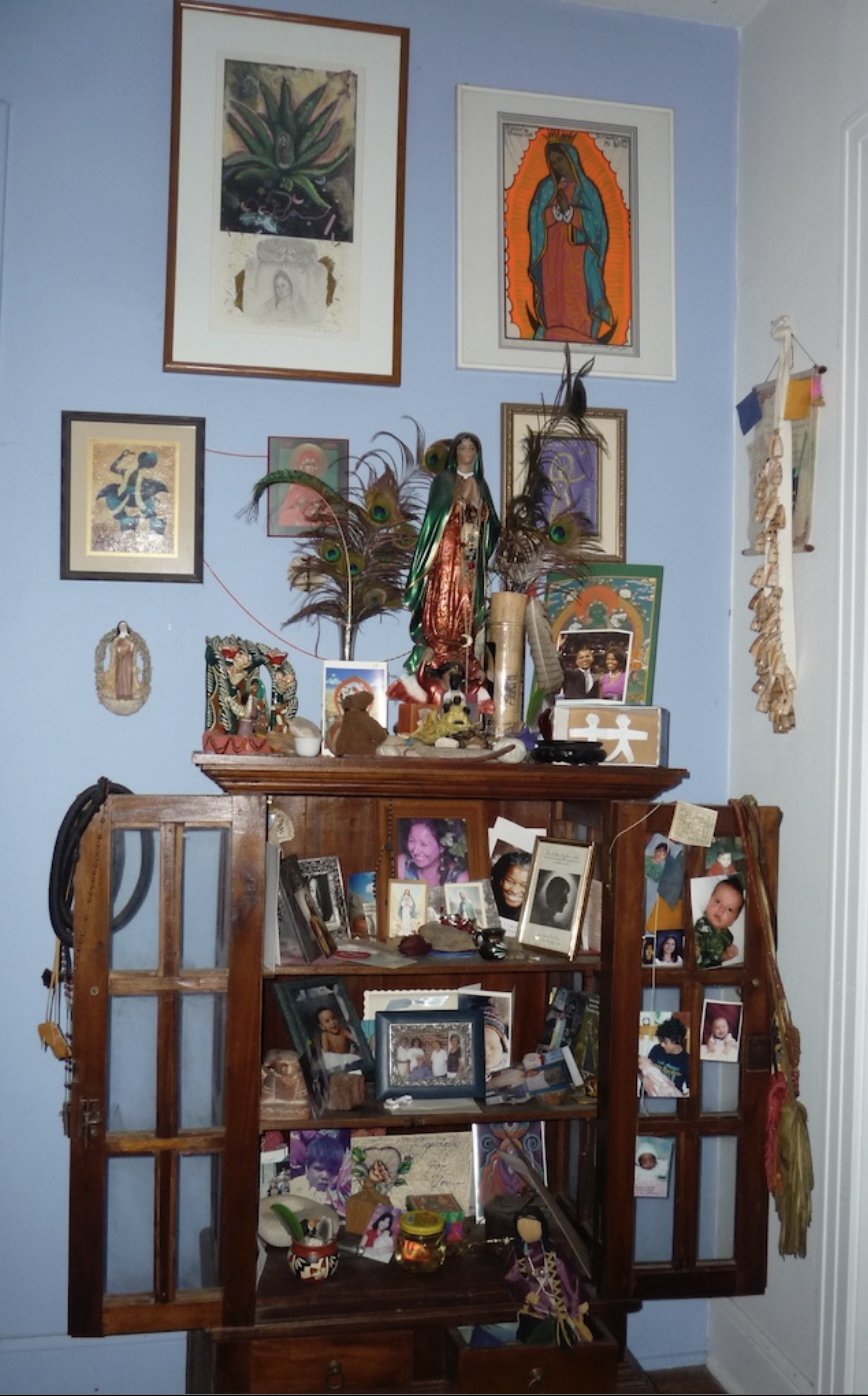
This book is an ofrenda, an offering of ‘spirit stories’ of movement-era Chicanas and their paths of spiritual activism.
Theirs were new worlds to me, rooted in lived experience, ancestral wisdom and memory, feminist and ritualistic practices, and soul-activating stories.
There is no better time to re-member, reclaim, and resist. May this book, its teachings and stories guide you on your own path of healing and liberation.
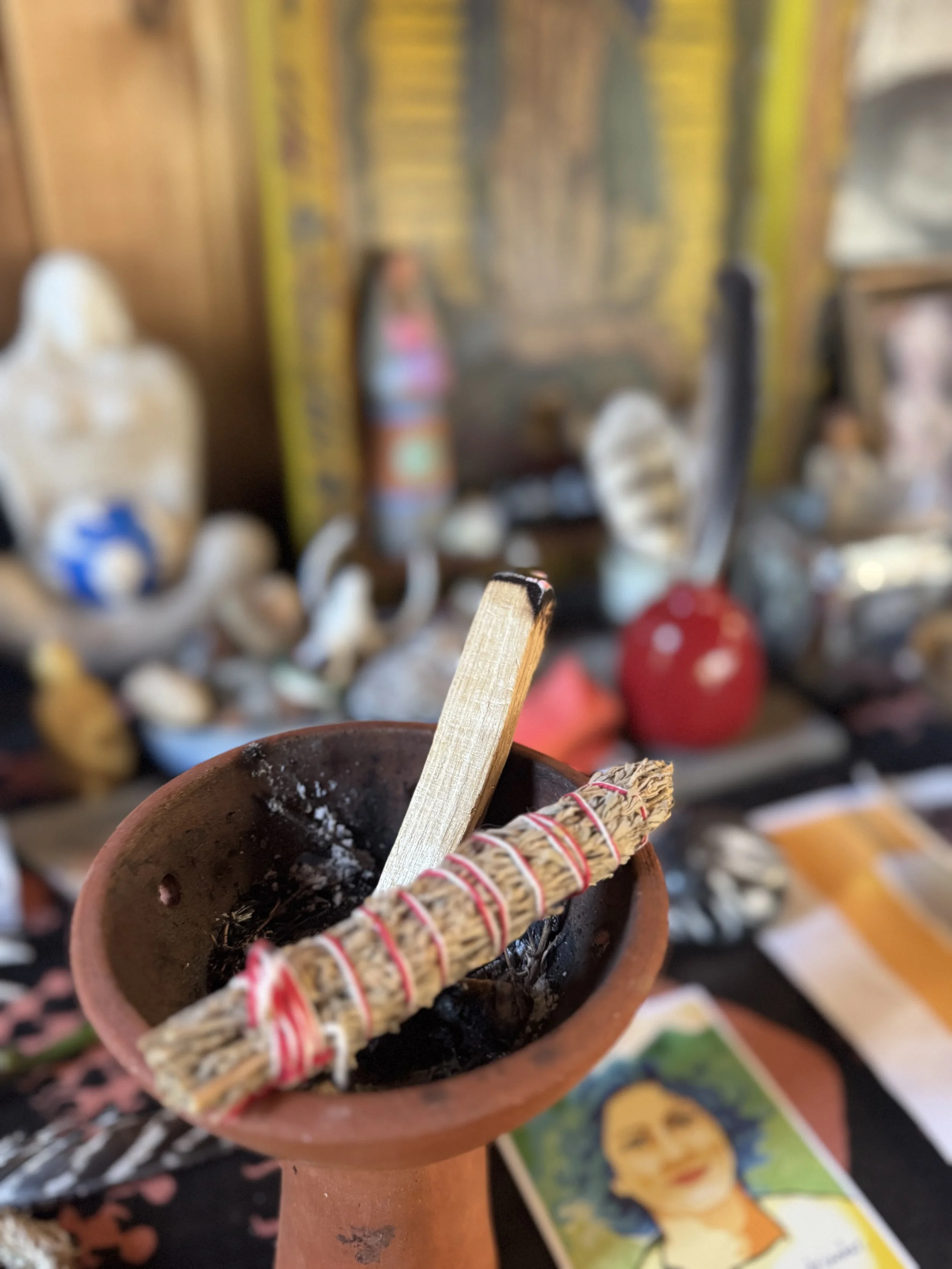
Home altar of Maria Elena Martinez, Austin, Texas.
My journey through conocimiento and with these remarkable spiritual activists reside within the pages of this offering.
Susana Almanza * Gloria Anzaldúa * Santa Barraza
Norma E. Cantú Rosie Castro * Martha P. Cotera
Carmen Lomas Garza * Inés Hernández-Ávila * Yolanda Chávez Leyva
María Elena Martinez * Mary Margaret Navar * Cynthia Pérez
Rev. Virginia Marie Rincon
The book details how they, I, and we together, re-membered.
We re-membered by honoring the ancestors, taking part in ceremony, and listening to the lands we are blessed to walk at the Indigenous Women’s Network’s Alma de Mujer Center for Social Change, guided by Our Lady of Guadalupe-Tonantzin, and through healing histories of the borderlands.
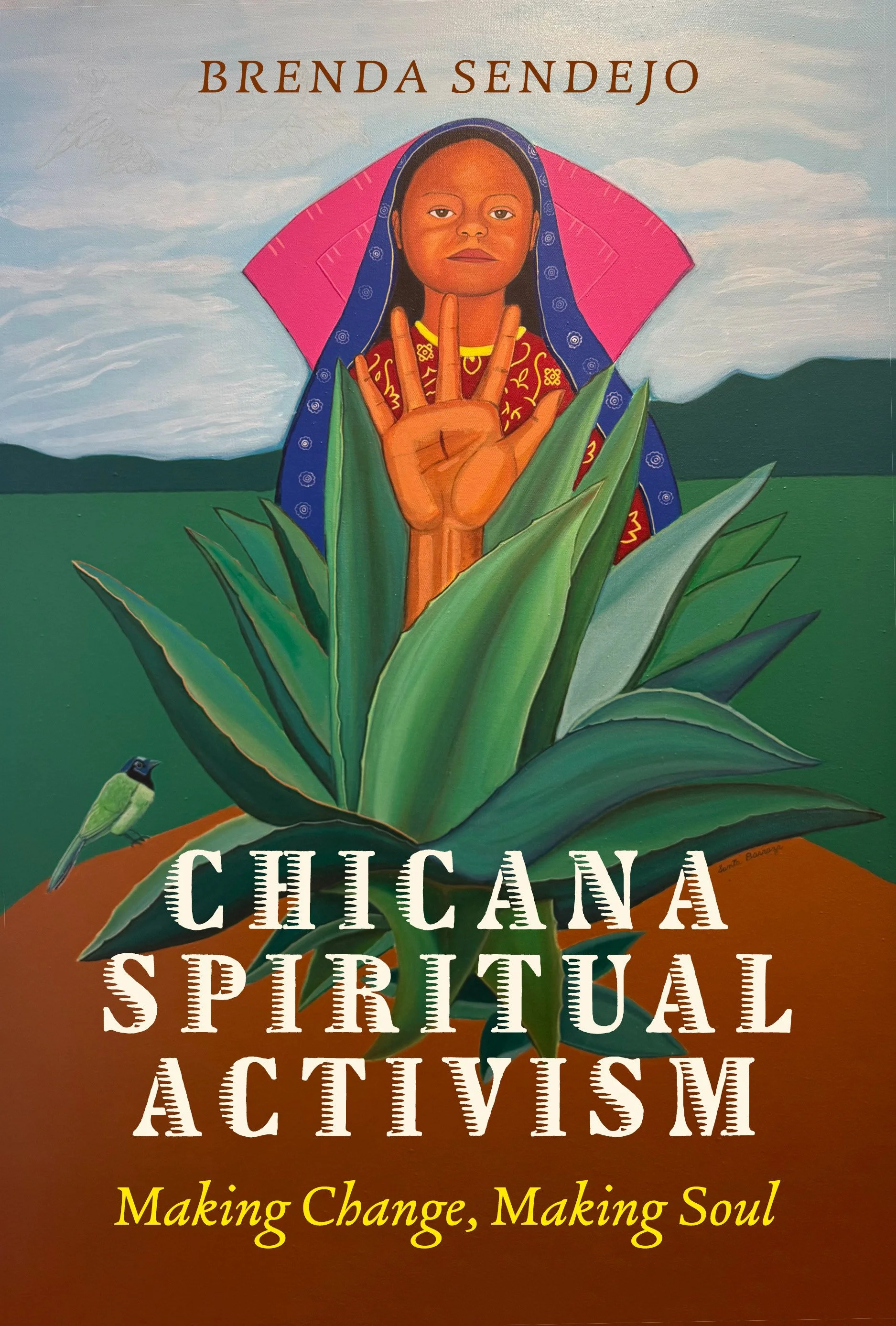
Book cover art by Santa Barraza, “Guadalupe Cuando Joven.”
Inside these pages, you will witness a living lineage, and through the book and presentations, be invited into:
Chicana feminisms in practice—as I learned them from the women themselves. Not only in the nepantla of academia, but in living rooms and around kitchen tables; marching together in protest and remembrance; in ceremony, in community, and always surrounded by love.
Creating space for our whole selves—learning how to allow our truest selves the time and permission to simply be, and, when ready, to emerge and sing our songs in the unique ways each of us is meant to express them.
Drawing from ancestral and intergenerational wisdom—stories that carry an unshakable determination to challenge patriarchy and guide us toward a renewed relationship with the Divine Feminine today.
Standing beneath the protective canopy of our foremothers—held by their deep and powerful roots as we learn to embrace our power, live our purpose, and do the vital work of tending to and sharing our medicine.
Learning to listen—to the wisdom of your soul, your heart, the land, the ancestors, and one another.
Reclaiming visibility and truth—no longer shrinking, but coming home to something deeply familiar: your truth, your power, and your capacity to create meaningful change while caring for your inner world.
The healing power of storytelling—your own and others’—stories of rebirth, resistance, healing, and reclamation.
Today, we continue to re-member, and invite you along on the journey.
Join us as we move towards sabiduría, re-imagining, dreaming, and building new worlds.
You are invited to witness the possibility and potential for outer world change-making and the inner work of re-membering.
I trace how, through their wisdom teachings, mentorship, feminista praxis, corazónes and cariño, a group of women taught me how to put back together the pieces of my once fragmented bodymindspirit.
I’ve come home to myself.
And you can too.
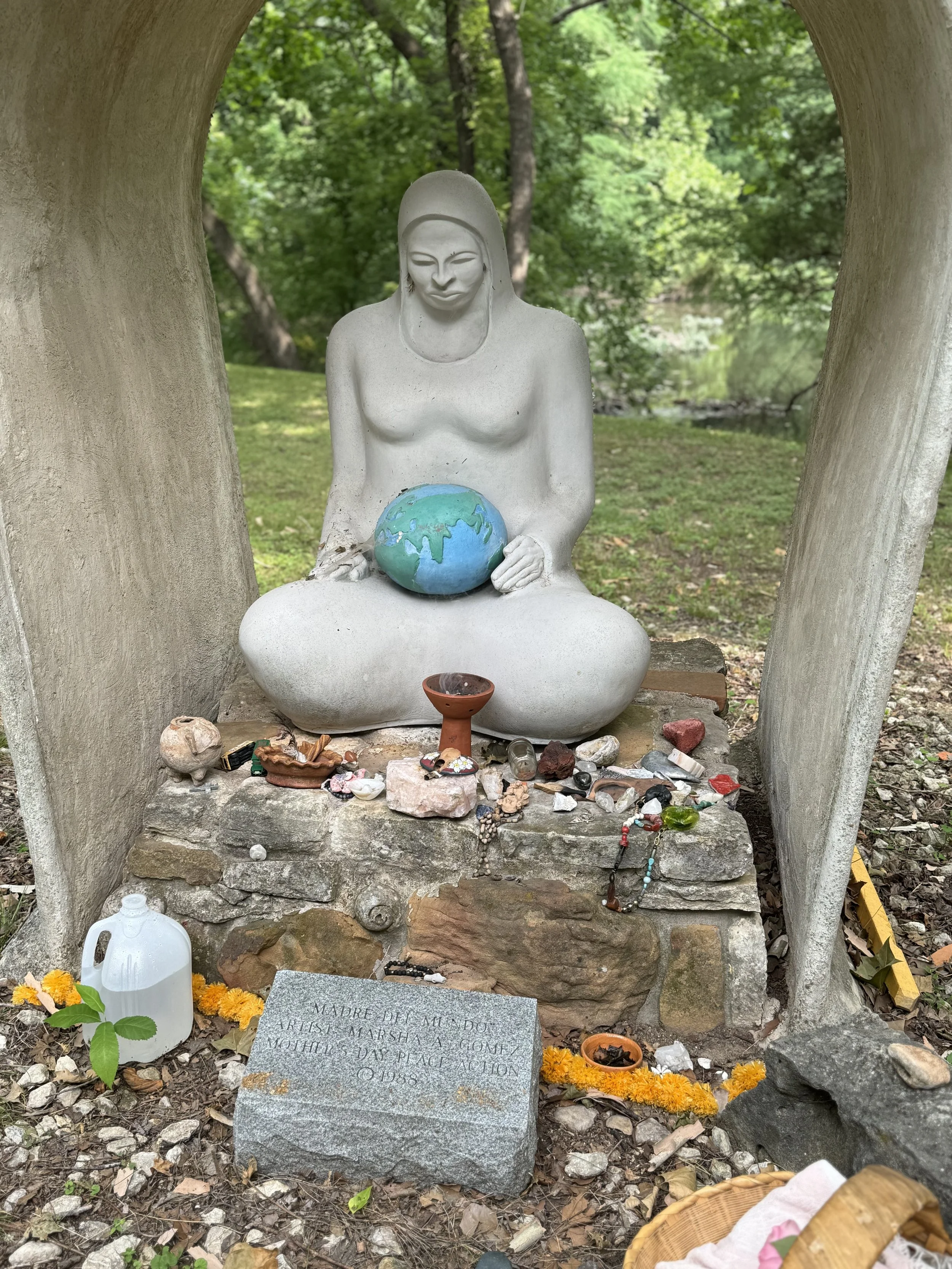
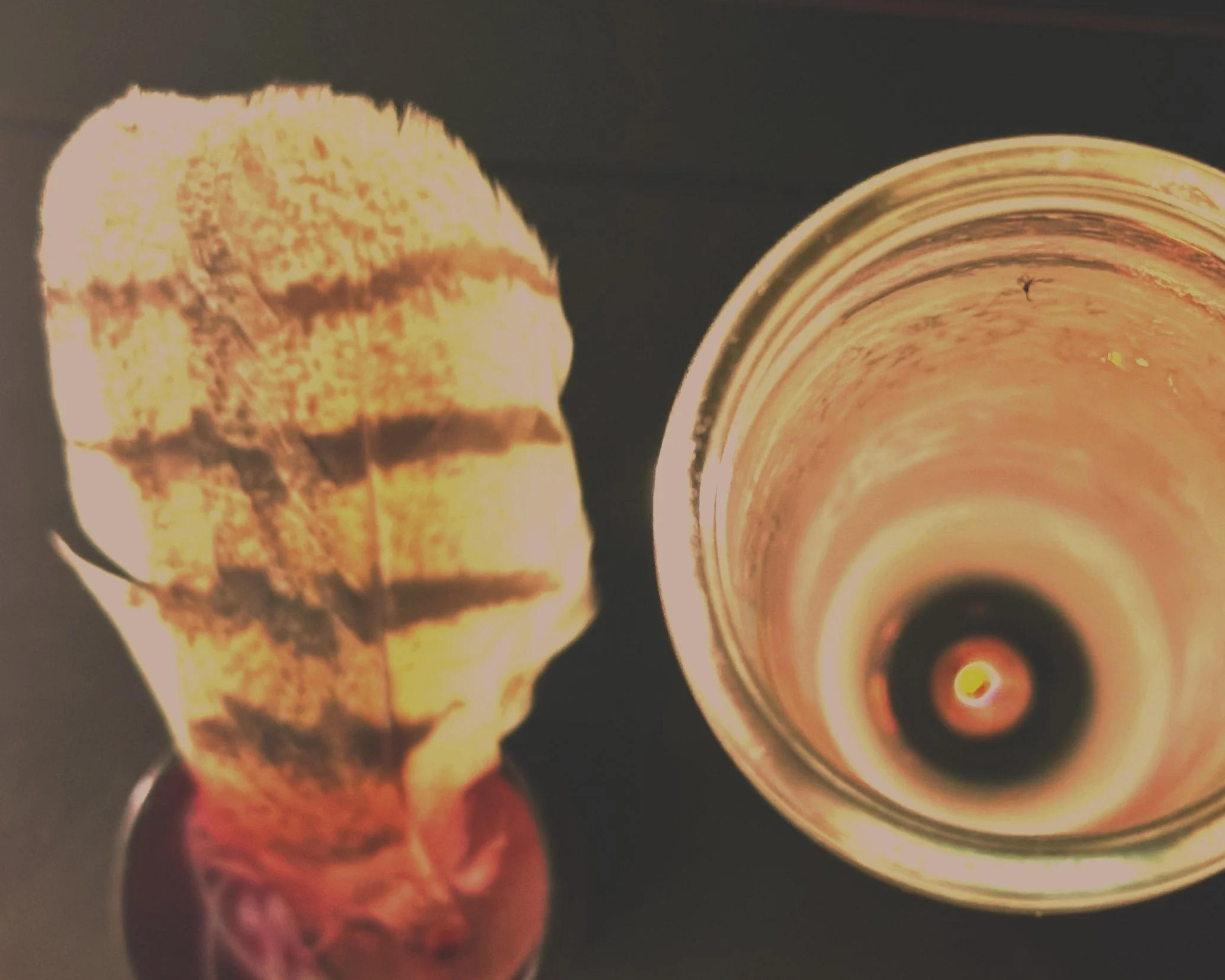
Top photo: altar at Alma de Mujer Center for Social Change. Bottom: “Madre del Mundo” sculpture by artist and former Alma caretaker, Marsha Gomez. Alma de Mujer Center for Social Change, Austin, Texas.